Negative attitude
Training feels tedious and frustrating — content evaporates before the "complete module" button is clicked.
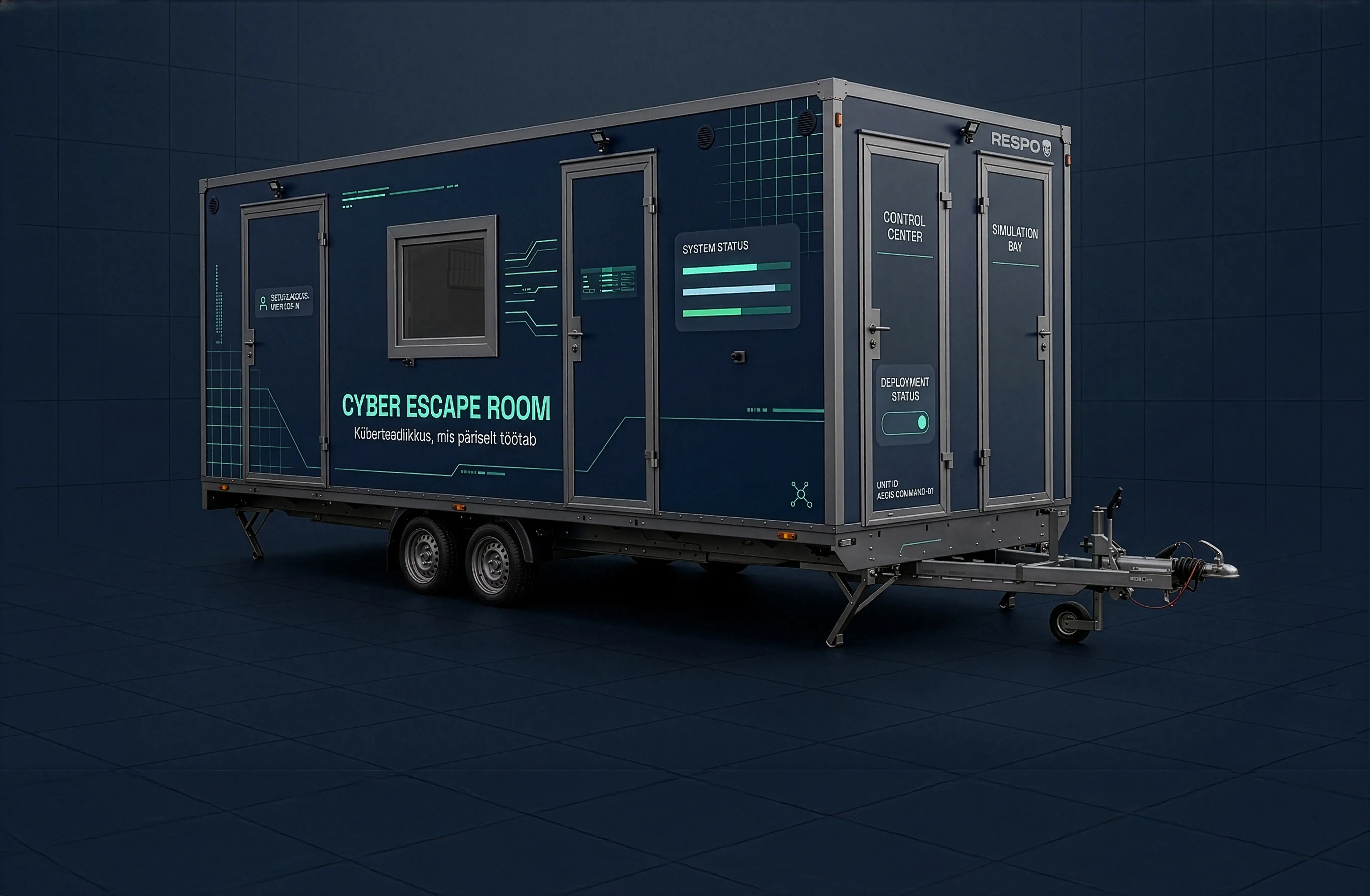
Cyber Escape Room is a mobile, immersive learning environment where teams don’t read or listen — they think and act like hackers. By navigating real attack scenarios and making decisions under pressure, participants discover firsthand how vulnerabilities are exploited and why cyber defence matters. The lessons learned are practical, memorable, and built to last.
Most cyber training today is an obligation, not an experience. It doesn’t change real behaviour at the moment that matters most — 4:42 pm on a Wednesday, in an email that just popped open.
Training feels tedious and frustrating — content evaporates before the "complete module" button is clicked.
A check-mark isn’t a real skill. Click-based assessments don’t train reaction under pressure.
One module for everyone — ignoring role, sector, prior knowledge. The result is mediocrity.
Human error isn’t the edge — it’s the front door. The data shows why technical defences alone aren’t enough.
Escape Room challenges participants to step into a hacker’s shoes. Under time pressure and surrounded by realistic security weaknesses, teams must uncover vulnerabilities, exploit weaknesses, and achieve their mission. Only by experiencing the attacker’s perspective do they truly understand the value of cyber defence.
Every session runs four scenarios built from real incidents. Need something specific? We add modules for your sector, roles, or context — turnkey.
 SCENARIO_A
A fake director demands an urgent transfer. Two messages, three false leads, one correct decision. Trains the instinct to spot social-engineering patterns.
 SCENARIO_B
The address bar is pixel-perfect. The domain is right — down to the letter. Teaches reading headers, links and behavioural cues in real time.
 SCENARIO_C
Leaked databases, reused credentials, a post-it behind the monitor. The team has to find the right auth model under pressure — and protect the key account.
 SCENARIO_D
Public Wi-Fi, suspicious extensions, a USB stick on the desk. Every choice leaves a trace — learn to see the attack surface in daily work.

Not slides. Not definitions. Four skills you can take to work on Monday morning.

Understand attacker psychology and technical execution — see the game from both sides of the board.

Build a cyber instinct that catches the details before damage can be done.

Stay calm and follow protocol when it counts — trained reaction, not panic.

Practical tools and routines for daily digital defence — at home, in the office, on the road.
Every session ends with an anonymised report — where the real weaknesses are, where the reflexes are strong, and what the next step of your security strategy should be.
An overview of your employees’ biggest risks and weaknesses — by role, team and scenario.
Concrete next steps for training, policy updates, and where to focus attention.
Real data to sharpen your security strategy — based on actual decisions, not assumptions.
Cyber Escape Room turns cyber defence into a skill — not just knowledge.